 EN
EN

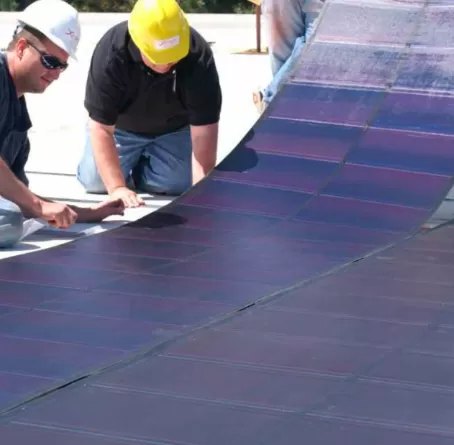
Thin Film Solar Panels are often overshadowed by their crystalline silicon counterparts. While they tend to be less efficient and require more installation space, they hold a unique market position thanks to their competitive cost advantage and vast growth potential. Moreover, their core strengths of high flexibility and easy installation highlight their value in vehicle charging applications—they can adapt to diverse charging scenarios and lower the threshold for clean energy-powered charging.

For residential or commercial properties planning to integrate commercial electric vehicle charging station systems, the adaptability of Thin Film Solar Panels is particularly prominent: in residential areas, their flexibility allows installation on garage roofs, balcony railings, and other areas to directly power home charging piles, creating a "solar energy-charging" loop and reducing reliance on the grid. In commercial parking lots, they can cover large areas of charging bay canopies and parking lot roofs to form distributed solar charging systems, providing clean electricity for multiple EVs simultaneously. Their lower upfront costs also significantly reduce the initial investment for commercial operators. Additionally, their lightweight nature makes them suitable for integration with mobile charging vehicles, expanding temporary charging scenarios. This article will provide key information to help you determine if Thin Film Solar Panels are suitable for your residential or commercial building, especially in scenarios where vehicle charging needs must be considered.
Related News
 Estar Wallbox
  Estar Twins EV Charger
  Estar Bright AC
  Estar Bright DC
  Estar DC Mini
  Estar DC Pro
  Estar DC MX
  Estar Mercury Etar E-ship charger
  Estar Home Mini
  Estar Home Pro
  Estar Home MX
  Estar Portable Mini
  Estar Portable Pro
  Estar Portable MX
  Estar AC Charging Cable
  Estar DC Charging Cable
  Estar EV Charging Accessories