 EN
EN


eVTOLs (Electric Vertical Takeoff and Landing vehicles) are rapidly moving from the experimental phase to commercial operation, and the maturity of charging technology has become a core factor determining their large-scale deployment. Currently, the industry has formed two mainstream energy supplement modes: charging pile charging and battery swapping, with continuous emergence of innovative technologies.
AC charging piles are the most widely used basic equipment at present, with power mostly ranging from 7-11kW. A full charge takes 3-5 hours, which is suitable for non-urgent scenarios such as night tarmacs. According to industry data, the global installation of eVTOL-specific AC charging piles exceeded 2,000 units in 2024, an increase of 85% compared to the previous year. DC fast charging piles and dc fast charger focus on efficiency; models with power above 60kW can complete 80% energy replenishment within 40 minutes. They have been deployed in batches at commercial takeoff and landing points in pilot cities such as Shanghai and Singapore, with an average daily service frequency of 12 flights per pile.
The battery swapping mode occupies a place with its extreme speed advantage. Automated battery swapping systems launched by companies such as Volant Aerospace can complete battery replacement within 5 minutes, which is 8 times more efficient than DC fast charging. However, the problem of standard fragmentation is prominent. Among more than 20 mainstream manufacturers, the compatibility rate of battery interfaces and communication protocols is less than 40%, resulting in the construction cost of battery swapping stations reaching more than 5 million yuan per station.
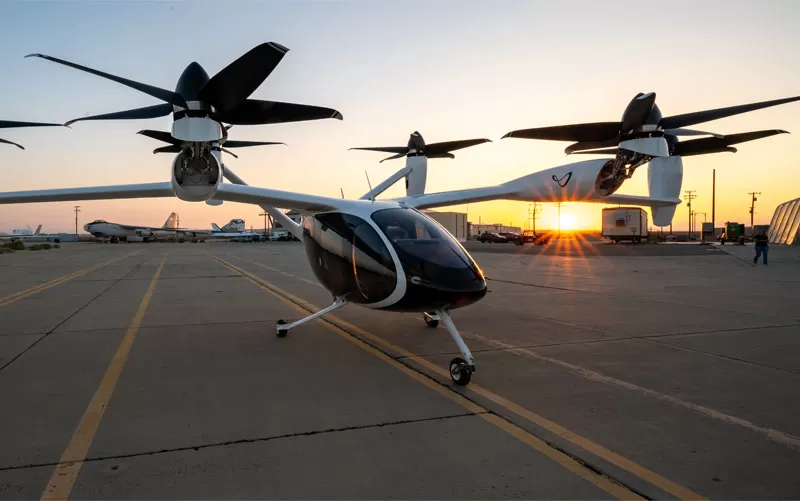
Recent technological breakthroughs continue to refresh industry perceptions: EHang Intelligent's 300kW ultra-fast charging technology compresses the charging time to 15 minutes through innovation in cell materials, while the battery cycle life remains above 2,000 times; the magnetic resonance wireless charging system jointly developed by Huawei and EHang has a transmission efficiency of 92%, and has completed trials at 12 takeoff and landing points in 3 cities including Guangzhou, Shenzhen and Zhuhai, with the daily average charging capacity in unmanned logistics distribution scenarios exceeding 500kWh.
The process of industry standardization is accelerating. The Civil Aviation Administration of China plans to issue the first batch of fast charging interface specifications in 2025, and the European Union will also release universal standards for battery swapping systems in the same period. In terms of market layout, more than 10 global benchmark cities such as Shenzhen and Dubai have launched special plans for charging networks, and it is expected that more than 500 dedicated stations will be built by 2026, driving related infrastructure investment of over 3 billion yuan. With technological iteration and standard unification, the energy supply efficiency of eVTOLs is expected to increase by another 50% within three years, clearing key obstacles for the commercial popularization of low-altitude mobility.

Related News
 Estar Wallbox
  Estar Twins EV Charger
  Estar Bright AC
  Estar Bright DC
  Estar DC Mini
 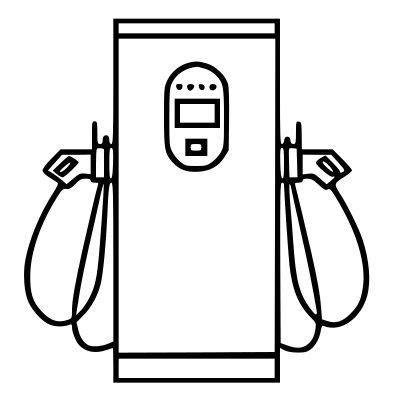 Estar DC Pro
 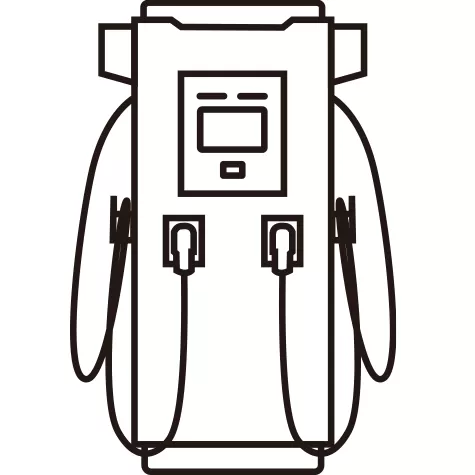 Estar DC MX
  Estar Mercury Etar E-ship charger
  Estar Home Mini
 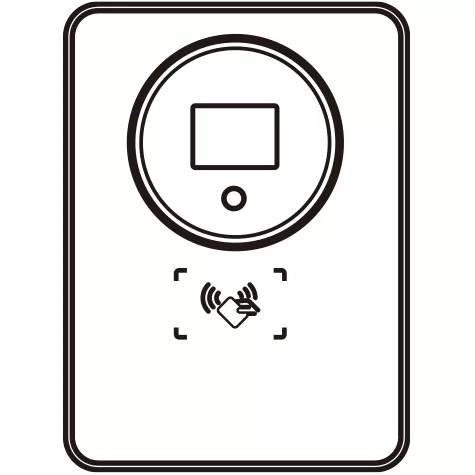 Estar Home Pro
 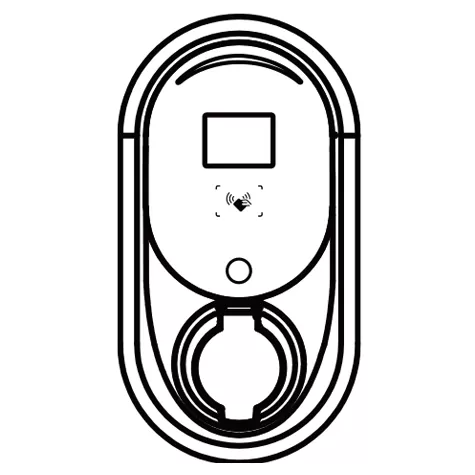 Estar Home MX
  Estar Portable Mini
  Estar Portable Pro
  Estar Portable MX
  Estar AC Charging Cable
  Estar DC Charging Cable
  Estar EV Charging Accessories