 EN
EN

As electric vehicles (EVs) continue to reshape transportation and logistics, the demand for reliable commercial EV charging station infrastructure is growing rapidly. Businesses, shopping centers, fleet operators, and real estate developers are all investing in electric car charger for business solutions to attract customers, support employees, and future-proof their operations.
This guide provides a comprehensive overview of commercial vehicle charging station systems, including types, benefits, selection criteria, and practical deployment strategies—designed to help you make informed, ROI-driven decisions.
A commercial EV charging station is a professionally installed charging system designed for public or business use rather than residential applications. Unlike home chargers, these systems are built for:
High daily usage volume
Multiple simultaneous charging sessions
Faster charging speeds
Network connectivity and billing integration
They are commonly deployed in:
Retail parking lots
Office buildings
Hotels and hospitality venues
Highway service areas
Commercial fleets and logistics depots
In essence, a commercial vehicle charging station serves as critical infrastructure that supports EV adoption at scale.
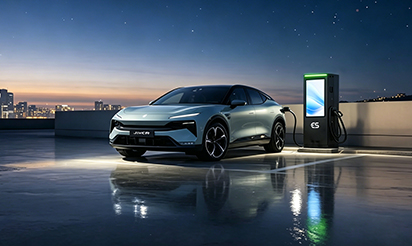
Investing in an electric car charger for business delivers both direct and indirect value. Key advantages include:
EV drivers actively choose locations where they can charge while shopping or dining. Charging availability can significantly increase dwell time and spending.
Businesses can monetize charging sessions through:
Pay-per-kWh billing
Subscription models
Parking + charging packages
For logistics and delivery companies, commercial vehicle charging station infrastructure reduces fuel dependency and lowers long-term operational costs.
Installing EV chargers helps meet environmental goals and improves ESG reporting metrics, which is increasingly important for investors and partners.
Early adopters of EV infrastructure gain a strong competitive advantage in retail, hospitality, and real estate sectors.
Choosing the right system requires evaluating both technical and business factors. Below is a practical decision framework:
| Factor | What to Consider |
|---|---|
| Power Capacity | Match charger speed with expected usage |
| Scalability | Ability to expand future charging points |
| Connectivity | Smart monitoring, app integration, billing systems |
| Installation Environment | Indoor, outdoor, fleet depot, highway |
| Maintenance Requirements | Remote diagnostics, service availability |
| Manufacturer Reliability | Long-term support and certification |
Working with experienced commercial EV charging station manufacturers is essential for long-term reliability and performance.
One example is Estar, a brand focused on advanced EV charging solutions designed for commercial and fleet applications. Estar EV Charging Solutions
Reputable manufacturers typically provide:
Certified safety standards (CE, UL, etc.)
Smart charging software platforms
OEM/ODM customization
Global after-sales support
Selecting the right partner ensures your charging infrastructure remains scalable and future-ready.
Commercial EV chargers are designed for high usage, faster charging, and network management, while residential chargers are built for single-user, low-frequency charging at home.
It depends on parking capacity and demand. A common approach is starting with 2–4 chargers and scaling based on usage data.
Routine software updates, connector inspections, and remote diagnostics are typically sufficient for most systems.
Most modern chargers follow universal standards (CCS, Type 2, CHAdeMO), ensuring compatibility with the majority of EV models.
The adoption of commercial EV charging station infrastructure is no longer optional—it is a strategic necessity for modern businesses. Whether you're managing a retail center, corporate campus, logistics fleet, or hospitality property, investing in a commercial vehicle charging station system enhances customer experience, supports sustainability goals, and creates new revenue opportunities.
By partnering with experienced manufacturers such as Estar and implementing a well-planned deployment strategy, businesses can position themselves at the forefront of the global EV transition.
Related News
 Estar AC Wallbox
  Estar Twins EV Charger
  Estar Bright AC
  Estar Bright DC
  Estar Mini DC Charger
  Estar DC Pro
  Estar DC MX
  Estar Mercury Etar E-ship charger
  Estar Home Mini
  Estar Home Pro
  Estar Home MX
  Estar Portable Mini
  Estar Portable Pro
  Estar Portable MX
  Estar AC Charging Cable
  Estar DC Charging Cable
  Estar EV Charging Accessories